
Midlothian Termite Guide: Protecting Your Home During Spring Swarm Season
As the cherry blossoms begin to bloom near Midlothian Mines Park and the temperatures climb into the 60s and 70s, residents throughout Chesterfield County are eager to get outdoors. However, homeowners in neighborhoods from Woodlake to Salisbury aren’t the only ones waking up this spring. Beneath the soil of our lush, wooded landscapes, Eastern Subterranean Termites are entering their most active phase of the year.
In the Richmond metro area, spring is synonymous with "termite swarms." For a Midlothian homeowner, understanding how these pests operate and knowing how to defend your property can mean the difference between a minor preventative measure and thousands of dollars in structural repairs.
Why Midlothian is a Hotspot for Termite Activity
Midlothian offers a beautiful mix of historic charm and new development, but our local geography and climate create a "perfect storm" for termite activity.
The Role of Chesterfield’s Humidity and Soil
We live in a humid subtropical climate. The high moisture content in our clay-rich soil provides the ideal environment for subterranean termites, which require constant moisture to survive. When the spring rains arrive in March and April, the softened earth allows termite colonies to expand their tunnel systems closer to your home’s foundation.
Established Neighborhoods and Mature Trees
Subdivisions like Brandermill and Founders Bridge are prized for their mature canopies. While these trees add beauty and property value, aging oaks and pines—or even old stumps near property lines—often serve as the initial nesting sites for large termite colonies. Once a colony outgrows its space in a nearby stump, it begins searching for new food sources: namely, the cellulose in your home’s framing.
Identifying the "Spring Swarm" in Central Virginia
Between March and May, usually following a warm rain, homeowners may witness a "swarm." This occurs when winged reproductive termites (called alates) leave an established colony to start new ones.
Termites vs. Flying Ants: How to Tell the Difference
It is incredibly common for Midlothian residents to mistake a termite swarm for flying ants. Here is how to distinguish them:
- Body Shape: Termites have a "thick waist," whereas ants have a pinched, narrow waist.
- Antennae: Termite antennae are straight and beaded; ant antennae are elbowed or bent.
- Wings: Termites have four wings of equal length. Ants have two large front wings and two smaller back wings.
Local Tip: If you find discarded wings on your windowsills or near the door of your garage, it is a sign that a swarm has already occurred and a colony may be attempting to nest within your walls.
DIY Prevention: How Midlothian Homeowners Can Lower the Risk
While major infestations require professional intervention, there are several steps you can take today to make your property less attractive to wood-destroying oragnisms.
1. Manage Moisture Around the Foundation
Termites are attracted to moisture. Ensure that your gutters are clear of debris—especially after our windy Virginia spring storms—and that downspouts carry water at least 3 to 5 feet away from the foundation. If you live in an older home in the Robious Road area with a crawl space, consider a moisture barrier or dehumidification system.
2. Be Mindful of Mulch
Many of us spend our spring weekends at local garden centers buying hardwood mulch. However, thick layers of mulch against your siding provide termites with a "bridge" over your foundation and a moist environment to hide in. Keep mulch at least six inches away from any wood siding or door frames.
3. Clear the Perimeter
Avoid stacking firewood against the house or storing cardboard boxes in damp crawl spaces. If you have "wood-to-ground" contact—such as a wooden deck post or a fence touching the soil without a concrete footer—these are open invitations for termites to enter.
When to Call a Midlothian Professional
Homeowners often ask if they can treat termites themselves using store-bought baits or sprays. In the Richmond area, the answer is generally no. Eastern Subterranean Termites live deep underground, often beneath concrete slabs or deep under crawl spaces. Surface treatments rarely reach the heart of the colony.
Professional teams, like those at Spire Pest Control, use specialized equipment to create a continuous liquid barrier or install advanced baiting systems that utilize the termites' natural foraging behavior to eliminate the entire colony, including the queen.
What Happens During a Professional Termite Inspection?
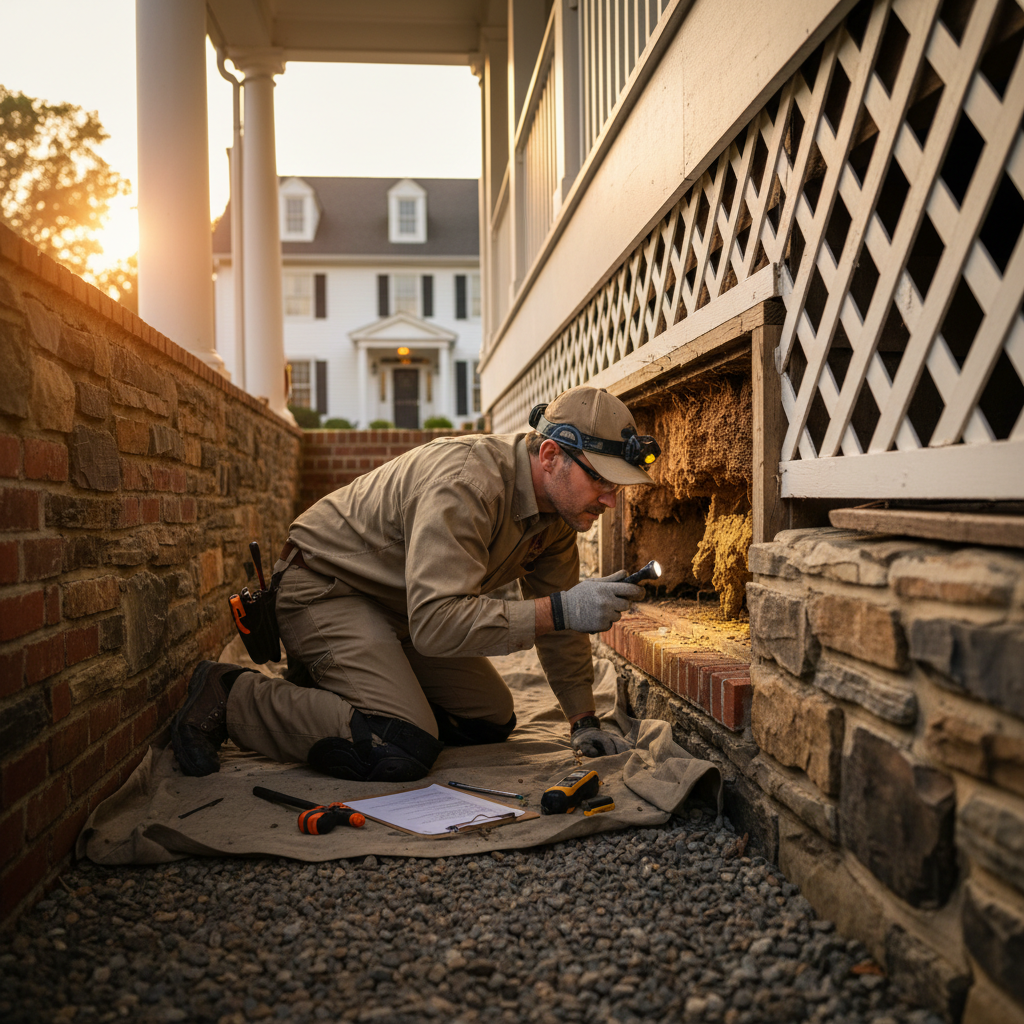
When a technician visits your Midlothian home, they aren't just looking for bugs; they are looking for evidence. A thorough inspection includes:
- Mud Tubes: These are pencil-sized tunnels made of mud and saliva that termites use to travel from the soil to your wood while staying moist.
- Probing Wood: Testing the integrity of sill plates, floor joists, and subflooring.
- Checking High-Risk Areas: Focusing on water heaters, bath traps, and where porches attach to the main structure.
Choosing the Right Treatment for Your Property
In Virginia, there are two primary methods for professional termite control:
- Liquid Soil Treatments: This involves applying a termiticide to the soil around the entire perimeter of the home. This creates a "treated zone." When termites pass through it, they carry the product back to the colony.
- Baiting Systems: Stations are placed discreetly in the ground around your home. Termites find the bait, share it with the colony, and the population is systematically eliminated.
At Spire Pest Control, we understand the specific construction styles common in Chesterfield County—from 1970s ranch homes to modern multi-story builds—and can recommend the system that offers the best long-term protection for your specific foundation type.
Protecting Your Investment This Spring
Your home is likely your largest financial asset. In the Richmond metro area, termite damage is not covered by standard homeowners insurance, making prevention and early detection essential. Because our local termite pressure is "heavy" according to national maps, annual inspections are the smartest way to avoid catastrophic repair bills.
If you have seen signs of "flying ants," noticed bubbling paint that looks like water damage, or found mud tubes along your foundation, it’s time to move beyond DIY methods. Spire Pest Control provides the local expertise and advanced technology needed to keep Midlothian homes termite-free all year long.
Schedule Your Local Inspection Today
Don't wait for the damage to become visible. Protect your home and enjoy your spring with peace of mind.
Contact Spire Pest Control today for a professional termite inspection and a free estimate on preventative treatment. We are proud to serve the Midlothian community and the greater Richmond area.