
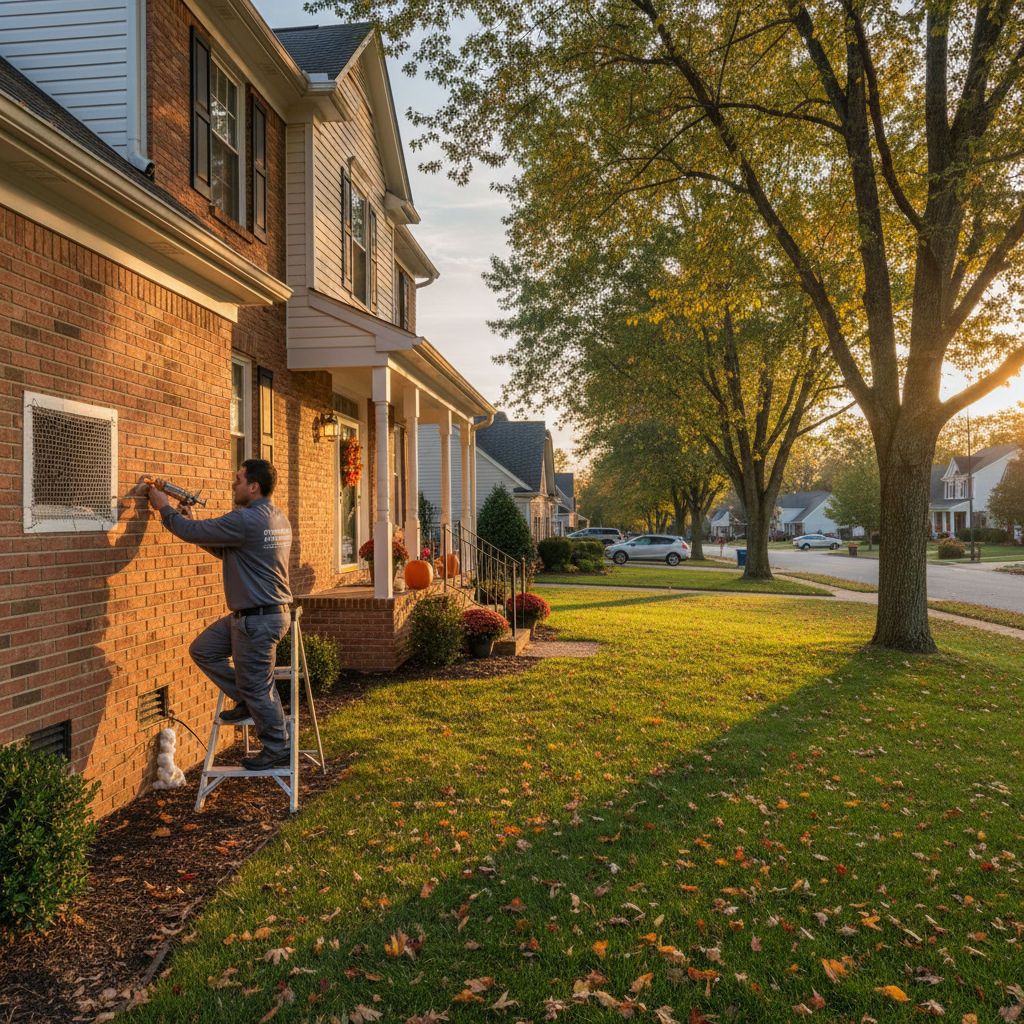
Richmond Spring Rodent Guide: How to Keep Rats and Mice Out For Good
Springtime in the Richmond metro area is beautiful. From the blooming azaleas at Lewis Ginter Botanical Garden to the bustling activity along the Canal Walk, the city is waking up. However, the warming temperatures of March, April, and May bring more than just flowers; they trigger a massive surge in rodent activity.
As the ground thaws and spring rains saturate the soil along the James River, local rodents like the Norway rat and the common house mouse begin seeking new nesting grounds. For many Richmond homeowners—from the historic row houses of The Fan to the sprawling suburban yards in Short Pump—this means your crawl space or attic could be the next target.
In this guide, we’ll explore the unique rodent challenges faced by Richmond residents and how professional exclusion can protect your property this season.
Why Richmond Homes are High-Risk for Rodents in Spring
Richmond’s unique blend of historic architecture and lush, river-adjacent geography makes it a "goldilocks" zone for rodents.
The James River Corridor
If you live in neighborhoods like Rocketts Landing, Westover Hills, or Stony Point, you are close to the James River. While the river is a crown jewel of our city, it provides a constant source of water and dense brush for Norway rats. When spring rains cause the river levels to fluctuate, these rodents often move toward higher ground—which usually means the foundations of nearby homes.
Historic Architecture and Aging Infrastructure
In neighborhoods like Church Hill or The Fan, many homes are over a century old. While these properties have incredible character, they often have stone foundations, settling crawl spaces, and original woodwork that has developed small gaps over time. A mouse only needs a hole the size of a dime to enter your home, and an older Richmond home often has dozens of such entry points.
The Spring "Nesting" Surge
Contrary to popular belief, rodents don’t just come inside during the winter. Spring is peak breeding season. As populations grow, young rodents are pushed out of existing nests to find new territory. Your insulation looks like the perfect bedding, and your pantry is the ultimate food source for a growing rodent family.
DIY Rodent Prevention: What Richmond Homeowners Can Do
Before you face an all-out infestation, there are several steps you can take to make your property less attractive to pests.
1. Landscaping and Yard Maintenance
Richmond's clay-heavy soil can lead to drainage issues. Ensure that mulch is kept at least six inches away from your foundation. Overgrown ivy—common in the Near West End—acts as a "rodent ladder," allowing mice to climb directly onto your roof and enter through soffit vents. Trim all branches back at least 3-5 feet from your gutters.
2. Manage Outdoor Food Sources
If you enjoy birdwatching or keep a garden in Chesterfield or Henrico, you might be accidentally feeding rats.
- Use squirrel-proof bird feeders and clean up spilled seed daily.
- Ensure trash cans have tight-fitting lids.
- If you compost, avoid putting meat or dairy scraps in open bins.
3. Basic "Soft" Exclusion
Walk the perimeter of your home. Check where utility lines (gas, water, or HVAC) enter the house. If you see gaps, you can temporarily plug them with stainless steel wool or copper mesh. Rodents cannot chew through these metals. However, for a permanent solution, professional-grade materials are required.
The Power of Professional Rodent Exclusion
While traps and baits can kill the rodents already inside, they don't solve the root of the problem: how they got in.
This is where Spire Pest Control specializes. Rodent exclusion is the process of "bug-proofing" (or in this case, rodent-proofing) your home’s structure. Unlike a DIY fix, professional exclusion involves a comprehensive top-to-bottom inspection of your home.
Sealing the "Envelope"
Our team looks for the hidden entry points that homeowners often miss. This includes:
- Gaping Construction Gaps: Often found behind gutters or where the roofline meets the siding.
- Crawl Space Vents: Replacing rusted or torn screens with heavy-duty hardware cloth.
- Thresholds: Adjusting door sweeps on garage doors and side entries.
By using high-quality sealant, metal flashing, and industrial hardware, Spire Pest Control ensures that once we get the rodents out, they stay out.
When Should You Call a Professional?
It is easy to ignore a single "scritch-scratch" in the ceiling, but in the world of rodents, there is never just one. You should contact a professional if you notice:
- Droppings: Usually found in back corners of pantries or along baseboards.
- Gnaw Marks: Evidence of chewing on baseboards, wires, or food packaging.
- Smells: A persistent musky odor or the smell of ammonia (urine).
- Pet Behavior: If your dog or cat is hyper-focused on a specific wall or a corner of the floor.
Rodents carry diseases and, more dangerously, often chew through electrical wiring, which poses a significant fire hazard to Richmond’s historic wooden homes.
The Spire Pest Control Approach to Richmond Homes
At Spire Pest Control, we understand the specific construction styles of Central Virginia homes. We don’t just throw down some poison and leave. We provide a holistic solution that includes:
- Sanitation: Removing the pheromone trails left by rodents that attract new ones.
- Trapping: Quickly removing the current population using humane and discreet methods.
- Exclusion: The most vital step—sealing your home so the cycle of infestation ends.
Whether you are dealing with field mice in Midlothian or roof rats in Carytown, our local expertise ensures your home remains a sanctuary, not a nesting ground.
Protect Your Richmond Home This Spring
Spring is a time for fresh starts, not for sharing your home with unwanted guests. Investing in rodent control and exclusion now can save you thousands of dollars in repairs and insulation replacement down the road.
Ready to secure your home?
Contact Spire Pest Control today for a comprehensive inspection. Our local Richmond experts will identify vulnerabilities in your home and provide a custom plan to keep rodents out for good.
Call us today or visit our website to schedule your free estimate!